
“If I have seen further it is by standing on the shoulders of giants” – Sir Isaac Newton

Heralded by many to be the foremost scientific mind in human history, Newton’s seat at the head of the class is challenged only by Albert Einstein. Born 25 December 1642 (Julian calendar), Newton was an English physicist, mathematician and one of the most influential scientists in history. He is most famously known for his book Philosophiæ Naturalis Principia Mathematica (“Mathematical Principles of Natural Philosophy”), commonly known only as Principia, but he was actually a prolific scientific author, publishing dozens of manuscripts and books on various scientific and political subjects. Newton’s achievements in the realm of science include:
- Inventing calculus (in competition with Gottfried Leibniz, resulting in the Leibniz-Newton calculus controversy)
- Demonstrating the prism effect and defining the spectrum of colour
- Inventing the first reflecting telescope
- Accurately describing the effect of gravity and formulating the Law of Universal Gravitation
- Formulating the Laws of Motion
- Contributing to the Formulation of the Laws of Thermodynamics
Newton held position as a fellow of Trinity College and was the second Lucasian Professor of Mathematics at Cambridge. Later in life he became the President of the Royal Society and held public office as a Warden and as the Master of the Royal Mint (where he helped develop many of the standard anti-counterfeiting measures still in place today.)

These contributions to the advancement of human society are indeed laudable and awe inspiring, the genius of Newton dwarfs even the intellect of Stephen Hawking, yet he was, as many are unaware, captivated by an obsession with the occult.
At the height of his career, Newton wrote many works that would now be classified as occult studies; in fact there is some question about whether he valued his work in the occult over his scientific achievements. He pursued the Fountain of Life and wrote extensively on Biblical Scripture, focusing on the apocalypse.
In fact Newton predicted the end of the world to occur not before the year 2060, as found scribbled in Newton’s hand on the back of a document in what is now known as the Yahuda collection.[1]
Newton was also fascinated by and wrote extensively on Chronology – which is the science of arranging historical and ancient events in their order of occurrence in time[2]– as well as the lost continent of Atlantis, and secret societies such as the Rosicrucians. But most of his time was spent pursuing the lofty goal of the Philosopher’s Stone through the practise of alchemy.
 Newton believed that it was in fact possible to change common metals into gold, and he believed that metals possessed a kind of life[3], thinking that the dendritic growth of silver from a solution, called a Diana’s Tree, was evidence in that regard.
In Newton’s time however, the church and the government alike banned the practise of alchemy, mostly to protect people from charlatans promising easy wealth. But the English hierarchy also feared the devaluation of gold should these alchemists be successful in their quest. Thus publishing works on his pursuit of alchemy would have put Newton’s freedom and life in jeopardy. As a result much of his works on alchemy were never published and it is believed that a fire in his lab destroyed much of that work anyway.
During his alchemical period, as it commonly called, Newton suffered a nervous break-down that caused him to pull away from society at large for several years. Many scholars believe that this episode might have been caused by accidental poisoning, whether by mercury, lead or some other element Newton might have used in his alchemical studies.
It is believed by some that Newton was a member of the Rosicrucians, the Priory of Scion (as made famous by Dan Brown’s novel The Da Vinci Code) or the Illuminati. Some even believe that he may have been successful in turning a common metal into gold, giving such secret societies a means to dominate free markets and ultimately control the path of the populous into the future. Though all published and available writings about or by Newton point to his efforts being for naught, it seems he did not succeed in his pursuit of alchemical supremacy.
Conspiracy theorists have latched onto Newton’s prediction of the end of the world, claiming that he found a secret code in the Bible, a series of equidistant letters that encoded prophetic events, such as 9/11, the JFK Assassination and several others. Unfortunately for the conspiracy theorists, no evidence can be found in Newton’s writings to suggest that he was successful at deciphering the Bible Code, even though he came up with his 2060 apocalypse prediction through that process.
The colourful history of Sir Isaac Newton is a testament to the value of a scientific world-view. His application of the scientific method brought about a revolution in scientific thinking, and one can’t help but wonder what was lost in his unpublished and destroyed writings on the occult. Would we be further ahead in our pursuit of the unexplained had he not felt the oppression of smaller minds? Newton was the giant on whose shoulders all scientists and occultists stand today.
[1] Snobelen, Stephen D. “A time and times and the dividing of time: Isaac Newton, the Apocalypse and A.D. 2060.”. The Canadian Journal of History. 38 (December 2003). pp. 537–551.
[3] “Isaac Newton and the Philosophers’ Stone“, Jane Bosveld, Discover Magazine, July/August, 2010


 Fortunately for our civilization at the time, electrical appliances weren’t in widespread use, and as a result, only a few telegraph services experienced a temporary disruption. A similar geomagnetic storm today would decimate our technologically dependent culture, rendering all computers, cell phones (and telephones for that matter) and vehicles useless, at least temporarily if not permanently.


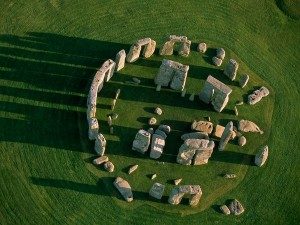 Among the megalithic structures of the ancient world, from huge pyramid complexes that boggle the mind, to rock walls consisting of precisely carved and placed stones of almost unimaginable size, to mysterious and beautiful stone circles, our history is rich with examples of ancient artistry and ingenuity.
 Rollrite Stones – Actually three distinct Bronze Age Neolithic monuments, the Rollrite Stones consist of The King’s Men, The King Stone and The Whispering Knights. The three sites are located near the village of Long Compton on the border of Oxfordshire and Warwickshire in the English Midlands. The Whispering Knights, a dolmen (a single chamber megalithic tomb), was the first to be built in approximately the 2nd millennium BCE, with The King’s Men following somewhere between the 2nd and 4th millennium BCE. The King’s Men is a stone circle believed to have trade based origins, much like Castlerigg, acting as a meeting place or market. The King Stone, located just north of The King’s Men, is a single standing stone of unknown date. It is believed to have been a marker for or a component of a Long Barrow or other burial site, but there is some speculation as to its alignment to the stone circle. The Rollritte Stones, especially The King’s Men, are an important site for neo-pagan magico-religious rituals.
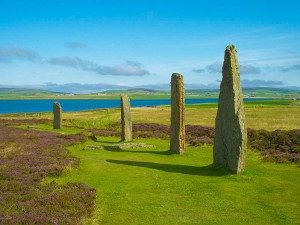 The Ring of Brodgar – (Also Brogar or Ring o’ Brodgar) The third largest stone circle in the British Isles and the youngest monument on the Ness o’ Brodgar, The Ring of Brodgar is believed to have been built between 2500 BCE and 2000 BCE. It has typically defied traditional dating techniques, and as the centre of the circle has never been excavated, little is known about its true age and purpose. The Ring sits in the West Mainland parish of Stenness, on Orkney Isle in Scotland. Among several other Neolithic sites in Orkney, The Ring of Brodgar enjoys protection as a World Heritage Site under the Heart of Neolithic Orkney. The site’s caretakers from Historic Scotland describe the site as “…the finest known truly circular late Neolithic or early Bronze Age stone ring and a later expression of the spirit which gave rise to Maeshowe.”
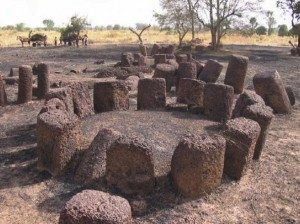 The Senegambian Stone Circles– Actually a collection of four large groups of stone circles, the Senegambian Stone Circles consist of over 1000 individual circles spread out over an area of approximately 15,000 square miles in and around Gambia, Senegal. Unlike some stone circle monuments in Western Europe, the Senegambian Stone circles, which were built around the eighth century, almost unanimously mark ritualistic burial sites. The circles were built by the ancestors of the Serer people of Senegal and have some connection to the steles of Roog, the supreme deity of the Serer religion. Also appearing on the World Heritage List, UNESCO describes the collection as “…a vast sacred landscape created over more than 1,500 years. It reflects a prosperous, highly organized and lasting society.”



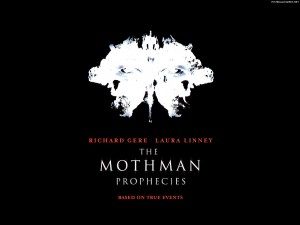
 In the world of UFOlogy and Cryptozoology few characters are as spooky and memorable as those associated with the Derenberger incident. And while many people may be unfamiliar with the case itself, the characters involved are infamous, both among paranormal circles and in popular culture.
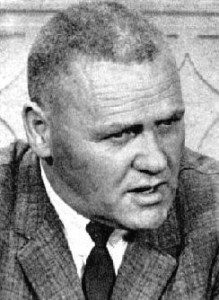
 But his story doesn’t end there, and neither does Woodrow Derenberger’s. Following the events of Point Pleasant, Derenberger made claims that Cold had admitted, through continued telepathic contact, that he was an alien from a planet called Lanulos within the galaxy known as Genemedes (both of which seem to be fictional). More than that, however, Derenberger claimed that Cold had actually taken him to Lanulos in a spaceship, where Derenberger claimed to have seen many other Lanulosians and relayed some commentary on their culture. Over the years, according to Derenberger, Cold was joined on earth by two other Lanulosians, named Demo Hassan and Karl Ardo, both of whom were apparently more discreet than Cold ever was.
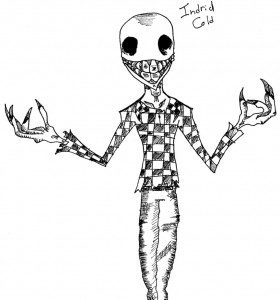 Keele believed that the first ever encounter with The Grinning Man occurred in Elizabeth, New Jersey on October 11, 1966, less than a month before Derenberger’s encounter. On that night two young boys, Martin Munov and James Yanchitis were walking home along a road that ran adjacent to the elevated New Jersey Turnpike. As they walked along the dark street, Yanchitis noticed a strange looking man standing in the darkness at the top of the treacherous incline, trapped by a chain link fence. Upon calling out to Munov, the boys watched as the figure slowly turned to face them with an unnerving ear to ear grin.


 Some try to frame their hypotheses in the language of science, of physics, such as the Quantum Theory of Ghosts developed by Max Bruin PhD., which says that ghosts are “an impression upon the subatomic weave of the universe, created via strong emotion of a sentient observer.”