
The Gate of the Sun at Tiwanaku
We humans are hopelessly obsessed with death. We expend an incredible amount of time and energy wondering about, worrying about, and preparing for that inevitable end to each of our lives. All of our religions are founded upon the idea that there is an afterlife, an existence beyond our corporeal selves. It’s been that way for a long time, too.
One of the primary indicators of early human culture is whether or not the people in question undertook to bury their dead. This happened as far back as 100,000 years ago, but the mindset that lead to it is likely much older than that. As a species, our preoccupation with death and its attendant features is likely as old as our ability to comprehend what it means to be dead.
But, for as long as we’ve believed that there is a place, or several places even, that our loved ones travel to in their long, dark sleep, we’ve also tried to find ways to reach that place without the mess of dying. This has been done in a number of ways; from mediation and chanting, to psychedelically induced spirit journeys, and to the physical embodiment of portals between this world and the next. Those portals offer an interesting look at the impact of afterlife belief on our cultures.

An artists rendering of the Plutonium in Turkey
In March 2013, a team of archaeologists from the University of Salento (Italy) stumbled across what has been dubbed ‘the gate to hell’ in southwestern Turkey. It is believed that this portal to the afterlife, in this case the Greek Underworld, is a temple used to worship the Greek god Pluto. Its traditional name is Pluto’s Gate or the Plutonium, and it was used by priests to demonstrate the power of Pluto and Kore – the lords of the underworld – to steal the life of whomever entered the portal.
A part of the World Heritage site of Hierapolis (now called Pamukkale), the Plutonium (which is Latin for Pluto) consisted of a shallow pool in which priests would sit to prepare themselves for rituals, a series of steps which served as an observatory for congregants, and a crude doorway into a natural underground chamber, from which deadly poisonous gases emanated. The ceremonies at this site often included animal sacrifices, such as bulls, wherein they would lead the animals into the cave and then drag them back out once the fumes had overtaken them.
There are other, less morbid examples of portals to the afterlife in our history though.
 Long have we known that the ancient people of what is now Bolivia and Peru in South America, had a penchant for elaborate temple construction and ritual, all in an effort to please and sometimes to communicate with their gods.
One spectacular example of ancient architecture dedicated to the transition between the here-and-now and the hereafter is the Gate of the Sun in what is now called Tiwanaku (also Tiahuanaco) in Bolivia. The peoples who built and occupied Tiwanaku are largely unknown, as the settlement is dated to the pre-Incan era of 300-1000 AD, and the culture responsible apparently had no written language. The Gate of the Sun is a 4 meter wide by 3 meter high stone archway that stands on an open terrace. The arch is adorned with 48 carved squares, each with an effigy or winged figure looking toward a central character whose identity is unknown. That central character is a carved figure of a man, with 24 radial lines surrounding its head, which may represent sunlight. This figure also holds two staffs, which some believe represent lightning and thunder.
As mentioned, we know next to nothing about the Gate of the Sun, but some have presented theories about its use. From an astrological observation post and primitive calendar, to a portal to the realm of the sky gods. Author and famed ancient alien proponent David Childress points to similarities between Tiwanaku’s Gate of the Sun and the legendary H-blocks at Pumapunku and claims that these sites are evidence of lost fund-knowledge from unknown prehistoric civilizations, such as Atlantis or Lemuria. He and others proclaim that the archway of the gate may have been, and perhaps still is, an actual portal to another realm. The precision of the carvings and block cuts at Pumapunku are widely held to be much too advanced to have been the product of a culture as primitive as the Incas or those before them. Childress also draws parallels between the Gate of the Sun and the Gate of the Gods.
The ruins of the ancient city state of Tiwanaku, where the Gate of the Sun stands prominently, is situated near the southern shore of Lake Titicaca, which is where the Aramu Muru portal is located.
Aramu Muru is actually found on the outskirts of a small town called Juli in the Hayu Marca hill. It and Tiwanaku are within the province of Chucuito, which is commonly known as The Rome of America. Aramu Muru is actually a rock face in the high-altitude mountains of Lake Titicaca that has been smoothed to a nearly flat surface with a roughly six foot high T-shaped alcove cut out of its centre at ground level.

Puerta de Hayu Marca at Aramu Muru, Lake Titicaca
That alcove is called Puerta de Hayu Marca, or in English, the portal of Hayu Marca, or more popularly, the Gate of the Gods. Most in mainstream archaeology view Puerta de Hayu Marca to be an unfinished construction project, as it consists only of the single rock face and alcove, and has no obvious purpose. There are traditional stories about the Gate, however, that show it to be quite important in Peruvian/Bolivian culture.
It’s said that the Gate of the Gods is a portal to the underground, and that it was used by a priest to travel to the underworld in order to hide the great golden disc of Coricancha away from the invading warriors of other lands. Locals have long told stories of strange looking beings – tall, slender and not of this Earth – coming through the portal. Some think, namely Childress and other ancient alien proponents, that the disc of Coricancha was actually some sort of alien technology used to activate and control the portal, which they believe is some kind of star-gate. In fact, paranormal writer Jerry Willis claims to have travelled through the gateway himself during his own investigation of the area, though that should be taken with a grain of salt.
 Lake Titicaca itself, being the highest altitude freshwater lake on the planet, is the subject of a great many stories involving strange lights, UFO’s and other odd phenomenon. In fact the whole area of Chucuito holds a wealth of strange stories and archaeological mysteries, and when you add in the various theories about this culture being a remnant of lost cultures the world over, it’s hard not to romanticise the findings and the people of the area.
Did ancient human cultures not only hold a belief in other realms of existence but also find a way to access those realms through some sort of lost knowledge, or perhaps knowledge offered by ancient visitors to Earth? Mainstream science says, probably not, and that’s based on the lack of evidence for the existence of such knowledge and/or visitors, but there are learned men and women who disagree.
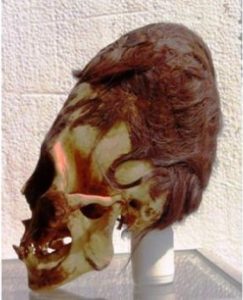 Ica, Peru is an exciting place, if you happen to be interested in ancient cultures and archaeology. Many old world curiosities have come out of this region of the world, like the Ica Stones for instance, and in fact, one of the most impressive collections of ancient textiles came from Ica. That may seem quite the opposite of exciting to you, but to those of us who study such things, the findings of Peruvian archaeologist Julio C. Tello in the Paracas peninsula of the Pisco province of Ica, have been ground-breaking in terms of understanding at least one lost culture of Peru.
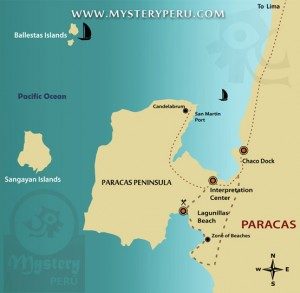 The Paracas people, for whom the entire Paracas peninsula is named, inhabited the coastal region from 800 BC to 100 AD, which makes them one of the oldest known Andean cultures. They had an aptitude for irrigation and water management, and their culture was rich in art and spiritual practices.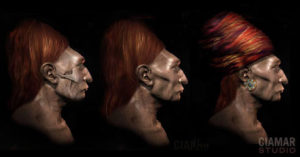


 I recently brought you some discussion on the concept known as senescence, or in layman’s terms, the process of ageing. My
 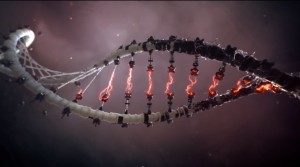 One of the leading theories about the cause of senescence is embodied in the term pseudohypoxia. Hypoxia is the term that described the process of cellular oxygen starvation, but pseuohypoxia refers to a different kind of cellular starvation. All of the cells in our bodies require certain things to remain functional and efficient. Oxygen is one of those things, obviously. Other nutrients and chemicals are also necessary, but optimal cellular function depends on maintaining very specific ratios of various compounds, and the reduction of certain compounds, NAD+ for instance, has the effect of impairing communication between mitochondria and the cellular nucleus. (NAD+ is an acronym representing the chemical compound nicotinamide adenine dinucleotide, but for the purpose of understanding what’s happening, knowing what that compound really is, isn’t necessary.)
 What’s truly incredible about this study is how they went about confirming the above hypothesis. Essentially, they fed NAD+ to mice, and what happened is nothing short of amazing.
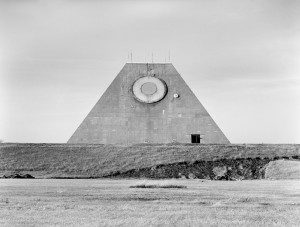 With all of the pyramids around the world, it seems clear that the ancients had an affinity for lasting architecture. They built things to withstand the winds of time. At least, they built certain things to last. Temples, tombs, ceremonial chambers and all kinds of sacred sites litter the landscape all across this planet, each one from an age lost to antiquity. Often, though, what didn’t survive alongside these megaliths, was any notion about what they were, why they were built, or how they were built. Sure, scholars are relatively certain that they’ve deciphered lost texts and cryptic hieroglyphics, and thus believe they have a decent grasp on answers to those questions, but there are many people who don’t agree that conventional wisdom in this regard is all that solid.
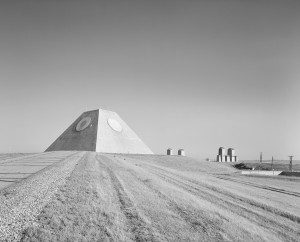 Will our legacy civilizations be just as perplexed by the purpose and significance of our buildings, should any survive that long? Will they argue amongst themselves about whether we had the technical expertise and engineering prowess to construct the wonders of our ancient time?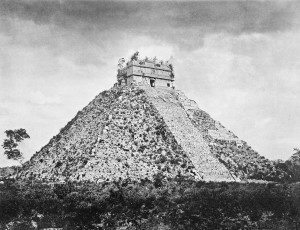
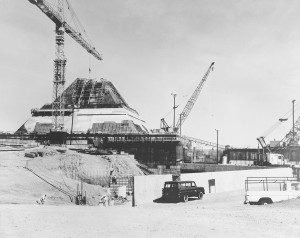 Cultural evolution progresses at a startling rate; in a matter of 300 years, whole language systems can become almost unrecognisable. Iconography becomes distorted and knowledge bases shift between world powers. War, emigration, social and financial collapse, natural disaster, all of these things could change the course of our cultural evolution en-route to unimaginable places in the future, and once our progeny reach their destination, will they recognise what they see behind them, or will they be just as baffled by their past, as we are by ours?
 I’ve had a computer nearly my entire 33 years. In fact, I still remember the command line sequence to boot up games on my long dead Commodore 64(LOAD”*”,8,1 if you cared). I’ve had imbedded in me the idea that a simple command line, or the pressing of ‘start’ can call into existence, rather quickly, an entire new reality in which I could exist. And, because of Commodore 64, I think Chaos Magick matters in this, the “New Aeon.”
 Why do we assign so much importance to coincidences? Let me paint a picture for you…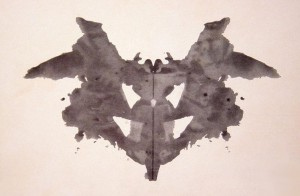
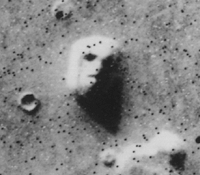

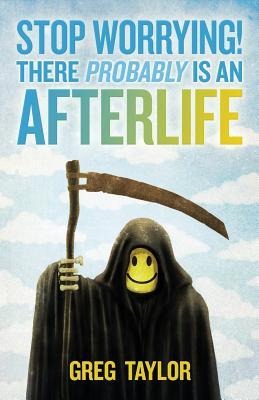
 I’m reading a book. It’s a book written by a friend. I call him a friend even though I’ve not met him, nor, likely, will I ever meet him. That isn’t why I’m reading it though. I’m reading it because it covers a topic that is dear to me, a topic that has vexed me for many, many years: Death.
 Death-bed visions are, much like near-death experiences, almost archetypal to the process of dying. At first glance they seem like an esoteric experience based in delusion, or hallucination, but upon further reading, one inevitably finds that not only are death-bed visions far more common than most anyone realises, but they are surprisingly similar among accounts. There are literally thousands of documented death-bed vision experiences, and, even by the most conservative estimates, millions of undocumented experiences. Depending on who you ask, these experiences seem nearly ubiquitous.
 This position is valid. It’s demonstrated in the phenomena associated with the afterlife, though in the interest of intellectual honesty, that phenomena isn’t readily accepted by those who don’t subscribe to any kind of religious tradition. It is largely unquantifiable, which is precisely why it sits in opposition to determinism. That doesn’t mean it should be dismissed, it means only that it should be recognised as less valuable to the discussion than some would prefer. It doesn’t end there though.
 The same is true for any object that exists in any medium, such as the atmosphere of the earth for instance. What we call air is no different than water, in that it is made up of fundamental particles; molecules and atoms, and as a result, those things that exist within it are fundamentally connected to any and all other objects that exist within the same medium.
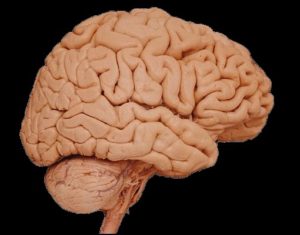
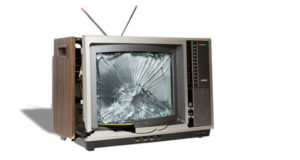 The false analogy between televisions and brains offers an inaccurate picture of the issue. Firstly, a TV has an obvious connection to the signal provider – a cable, or in some cases a wireless transceiver – but our brains do not. Mammalian brains, or even lower order brains for that matter, have no apparatus for sending or receiving signals of any kind. In the case of a television, if you physically disconnect the source of the signal, the set will not work (properly). You can even go so far as to enclose the TV in a Faraday cage, and the effect will be that no signal of any kind can reach its transceiver, thus it will not work.
 I can already hear the argumentative machinations of the dualists winding up. “But there could be an energy that we just haven’t discovered yet!” Sure, there could, but we’ve seen zero evidence of such an energy in all other endeavours. Nature isn’t that wasteful. The four fundamental forces are found everywhere. They have an effect on everything…all four of them. How could it be that there is another energy that only affects consciousness and which doesn’t interact with the other four in any way?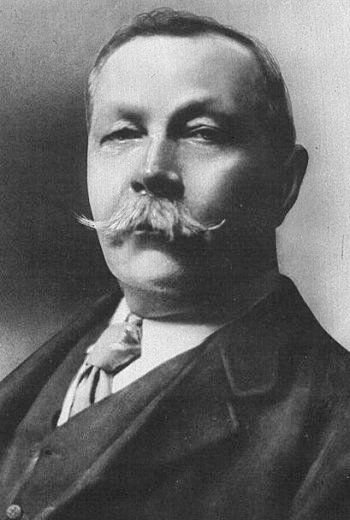
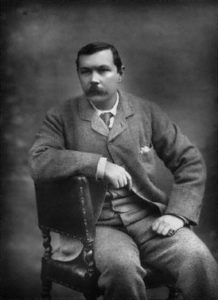
 In his quest for answers, Conan Doyle befriended the one and only Harry Houdini. Oh the conversations those two must have had! Though, Houdini wasn’t a man to be fooled by the trifling ploys of little girls; he was arguably the most successful debunker of charlatan psychics, mediums, and flim-flam artists that there ever was. Despite his reputation as possibly the best magician and escape artist that ever lived, Houdini was an avowed skeptic, and was vocal about the fraud being perpetrated by those in the spiritualist movement. And thus, their brief friendship came to an embarrassing and very public end when they couldn’t reconcile their philosophical differences. Interestingly, Conan Doyle continued to assert that Houdini himself had supernatural or divine powers, most notably in his book The Edge of the Unknown (1930). Not surprisingly though, Houdini vehemently denied this, and even tried to show Conan Doyle how the various tricks were done, but was apparently unsuccessful in convincing the great writer of the truth.