
Electronic Voice Phenomena, abbreviated as E.V.P., is one of the most popular forms of paranormal evidence presented in circles of research and investigation. In spite of many mainstream explanations and sceptic arguments, believers are passionate in their defence of this marvel of modern technology and ghostly influence.
Popular reality TV shows, such as Paranormal State and Ghost Hunters, have brought EVP back into the spotlight with mainstream culture; and for such a complicated technological process, it is widely accepted as the standard of evidence for a successful encounter with a spirit or ghost.
This sought after Holy Grail of paranormal evidence is given so much weight, for possibly the wrong reasons, though individually, it is difficult to hear any such recording and not sympathise on the side of belief. On the whole, however, there are much more scientific explanations for electronic voice phenomenon.
The idea of EVP was a natural evolution of the explosively popular spirit photography of the late 19th and early 20th century. This was a time when séances, complete with lurching tables and self lighting candles, were to blame for the vast majority of socialite hysteria. In the time of the industrial revolutions infancy, people were still prone to believing in supernatural causes for completely natural events, including flim-flam artists out to make a buck on the misplaced awe of a gullible and newly wealthy upper crust.
Notably, a Latvian photographer and self-proclaimed medium, Attila von Szalay, was one of the first documented paranormal investigators to attempt to record the sounds of the dead, during his life long pursuit of ghosts and zombies. His first attempts, in 1941, involved the use of a 78rpm record, though failing to find success he quickly moved to the use of a reel-to-reel tape recorder and believed he found what he was looking for.
Swedes, Friedrich Jürgenson and his later partner/collaborator Konstantin Raudive dove into the “science” of EVP and accumulated more than 100,000 so-called recordings of the dead. Some of their recordings were conducted in an RF-screened laboratory, so as to eliminate the chance of radio interference on their early recording devices, and to their credit, most, if not all, of their experiments were conducted within the scientific method, as was accepted as the standard at the time.
Jürgenson and Raudive invited listeners to scrutinize their recordings in an attempt to confirm their findings, as they believed that their recordings were clear enough to be interpreted by anyone. Raudive eventually went on to write his first book, Breakthrough – An Amazing Experiment in Electronic Communication with the Dead, in 1968, which was later translated to English in 1971.
Through the ages, the lure of EVP has remained strong, and despite the many scientific arguments against it, has remained the staple of nearly every paranormal investigator and ghost hunter since the turn of the century.
Recording EVP is perhaps the simplest part of a paranormal investigation yet. Simply set a sensitive audio recording device to record for an indefinite period of time, undisturbed, in an area where ghostly activity is said to occur, and later, examine the recording for voices in the static.
It really is that simple, though in that simplicity might lay the problem. The first question that jumps to mind when one is excitedly presented with EVP evidence, is based in traditional psychology. Are you/we hearing, what we think we’re hearing?
Auditory pareidolia, a psychological phenomenon involving a vague and random stimulus (often an image or sound) being perceived as significant, combined with apophenia, the experience of seeing patterns or connections in random or meaningless data, are the front running explanations for, not only EVP, but also for other paranormal phenomena as well.
The two camps of belief, obviously separated by a collective suspension of, or adoption of scientific reasoning, respectively account for both the paranormal culture and the mainstream scientific culture. As easy as it is to find patterns in white noise and attribute those completely random results to an unseen intelligence, it is far more difficult to support your analysis without the influence of belief.
In those rare cases where verifiable audio results are recorded and collective agreement can be made that the above is not responsible for a false positive in analysis, the physical realities of audio recording must also be taken into account.
As noted earlier, the early Swiss experiments in EVP, were often conducted within the cover of an RF-screened laboratory. This wasn’t just a way to steal mainstream credibility, Jürgenson and Raudive knew that even in the mid 20thcentury, there were enough random and specific radio frequency waves flashing about the environment that interference was not only possible, it was likely. Fast forward to today’s technology, with the addition of cellular signals, high and low frequency radio signals, direct satellite signals, and who knows what else; we’ve got a veritable interference hodge-podge floating above our heads at any given moment.
It would be naïve to suggest that any EVP recording was completely free of RF, electrical or any other type of interference. One trick many ghost hunters use, is to adjust the gain of the recording devices (microphone sensitivity), in order to enhance the background noise and/or white noise in the environment. Not only does this increase the possibility of picking up man-made interference, but it also sets listeners up to be fooled by their own brains, into thinking there actually is a voice on the recording.
Some readers may be shaking their heads and fists by this point, and it should be said that each case of EVP should always be judged independently, as ever changing environmental conditions, and recording techniques leave too wide a field for interpretation. No one can, and certainly no one should, say that all EVP evidence is either the result of interference or misinterpretation. Clearly, there is a mounting pile of convincing EVP evidence that deserves much closer scrutiny.
In recent discussions on the topic, experiments have been suggested that could test and provide statistics for EVP evidence based on signal frequency and volume, as well as directionality. Suffice it to say that there is much work to be done in finding the right way to not only record EVP, but also to interpret what so many steadfastly believe to be the voices of the dead.
 Over the past two years I’ve written many blog posts on many topics, but among the masses there are a few that run together in a sort of series. These posts deal with what I believe are true psychic abilities, in contrast to what I believe are completely fake psychic abilities. Each of the posts that I will refer to herein describes scientific efforts to quantify and measure certain phenomena that are colloquially referred to as PSI. They are my attempt to bring some of this scientific advancement to the fore, but I’ll admit that I have had an ulterior motive. To me, these posts are like strings of thought, and using them I’d like to braid a cohesive idea, a monologue that resembles the tiny inkling of a thesis that simmers in the back of my mind.

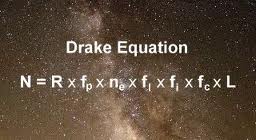 The current state of UFOlogy notwithstanding, it’s an awe inspiring thing to look into the night sky and ponder the question that haunts so many…is there life elsewhere in the universe?
 As anyone whose read my blog in the past already knows, I am not a spiritual or religious man. In fact, I am an atheist; in that I don’t believe in God (I’ll forgive a slight gasp of disbelief for those who are new to my writing). I find the whole idea to be nonsense, but this is my choice, as it is the choice to believe for anyone else…but is it really a choice? Are we born capable of intellectualising such matters? Some would say yes, others would say no, and I have another argument to offer.
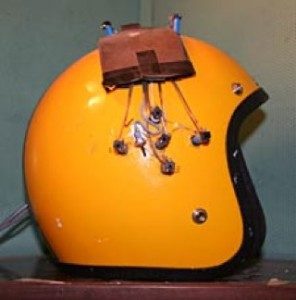
 What if I told you that your propensity for belief, whether in God or aliens or ghosts or what-have-you, is actually the product of your brain interpreting electromagnetic signals in the atmosphere? Whatever you might say, I would tell you next of Canadian Neuroscientist Michael Persinger’s God Helmet. Literally a device that is purported to bring about religious or spiritual experiences, the God helmet has been the focus of much scrutiny of late. Originally conceived to aid Persinger and his research partner Stanley Koren in a study of creativity and the effects of subtle stimulation of the temporal lobe, the God helmet was found to provide a much more profound experience than just inspiration.
 In any event, the God helmet uses complex magnetic signals patterned after physiological processes, such as one derived from limbic burst firing, to elicit a response in the subject’s experience. His subjects reported feelings of a presence in the room with them, visions of angels or of deceased persons known to the subject, and most poignant, a feeling of being in the presence of God.
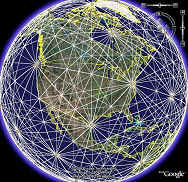 Ancient Astronaught theorists like to assert that the world grid is an old world navigation system, used by extraterrestrials and possibly taught to ancient man. In some circles it’s said that these ancient spiritual sites are in fact revered as sacred because of those teachings.
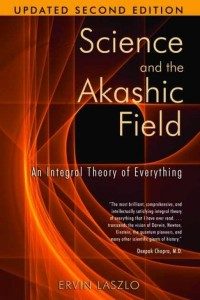 Science and the Akashic Field, a relatively small book, is definitely not a light read. Written by philosopher of science Ervin László PhD, this is a thorough tour of virtually every contemporary science on the way to an understanding of László’s Integral Theory of Everything. Where the likes of Einstein, Newton and many others have created various theoretical works, none have been able to encompass every aspect of the reality we all experience. It appears that László has succeeded in revealing such a TOE, an I-TOE. He has spent decades examining the works of other theoreticians in search of evidence for what he calls the Akashic field, or the A-field, which is the foundation of his theory.