Ben Goldacre’s Bad Science; A Review

I really enjoyed this book. Not necessarily my all time favourite, but it’s definitely in the top 10. If you consider yourself informed on the science of medicine, or even just the scientific method…you need to read this book.

Ben Goldacre is witty, supremely knowledgeable, and an excellent author. I am now far wiser on the perils of big pharma, medical science reporting in the media and homeopathy. I share Goldacre’s disdain for the hijinks of the nutrition and vitamin industries, and for homeopath pseudo-intellectuals who pass bad science off as gospel truth.

Goldacre’s writing style does take some getting used to, what with his use of common British idioms and some colourful language. His point, nonetheless, should be heeded by everyone, especially since general health and wellbeing are at the forefront of everyone’s mind these days.

He will teach you, the layman, the in’s and out’s of interpreting the technical jargon of the most complex scientific studies and press releases. More than that though, he’ll teach you how to spot bad science in today’s world of information overload.

Pick up your copy of Bad Science Today, through Amazon.com

The Science of Leonardo: Inside the Mind of the Great Genius of the Renaissance

I thoroughly enjoyed this book. Contrary to the opinions expressed by my fellow critics. I found the authors passion for Leonardo and for Leonardo’s science to be riveting. I have not studied Leonardo directly, and so appreciated the inclusion of such biographical detail. I realise that there are literally thousands of books written on Leonardo, from diverse perspectives. Though I was pleased with the mix of science discussed by the author as it related to Leonardo’s life, his art and his death. I found exactly what I was looking for in this book.

Having said that, I can see how those more advanced in their understanding of art, or of Renaissance science / history might have found it to be somewhat cursory, though as a newcomer to this subject, I think that this book should be heralded as a must read for those embarking on self directed study of the Master and his work.

I gave this book four and a half out of five.

Buy a copy of The Science of Leonardo via Amazon.com today!

The Greatest Show On Earth, A Review

The Greatest Show on Earth is by far the Greatest Book Ever Written (well, at least by Dawkins’). Having his entire collection on my bookshelf, I am in the common position to compare this to all his other works, and I feel that I am safe in declaring that The Greatest Show on Earth should be required reading in all high school curricula.

In contrast to my usual complaint over Dawkins’ work, this book is joyfully free (for the most part) of secular preaching, and provides one of the most comprehensive and easily digestible explanations of Darwinism, evolution and evolutionary biology that can be found anywhere.

Being a fan of Dawkins, I would be likely to offer a recommendation for any volume in his collection, though this book is, in my humble opinion, quintessential to understanding the complex, beautiful and entirely necessary science of evolution, (in lieu of pursuing a doctorate in biology)

I give The Greatest Show on Earth five out of five…Buy it, read it, recommend it!

Friday the 13th, A Day Like Any Other

As I write this piece, millions of people are wringing their hands with worried frustration, they are fearful of the bad luck that will surely befall them over the course of the day.  Today is Friday the 13th, and I need not explain that superstition further, though I shall.

Friday the 13th has long been a day of superstitious forbearance; it is connected to several ancient legends and is the focus of more than one phobia.  Historically speaking the legend that says Friday the 13th is a day of profound bad luck, comes out of medieval Europe around the turn of the fourteenth century.  It is said that as the knights Templar, a monastic military order, charged with protecting Christian Pilgrims along the path from Europe to Jerusalem during the Crusades, came to be a debtor of King

Philip IV of France

in 1307AD, to the potential ruin of the French Empire.  In order to quell the impending disaster of dept collection, Philip arranged the demise of all Knights Templar in France via orders that were to be opened on the morning of October the 13th, a Friday.  The orders accused the Knights of egregious acts of heresy, and demanded that French troops engage and arrest any and all Knights Templar in France, seizing land, and assets in the name of the King and of Pope Clement V.  Following arrest, medieval torture tactics were used to force confessions for their crimes and eventually all of the knights were executed.

To add insult to injury, King Phillip had the Templars buried in a public manner: a large event in front of the Notre Dame Cathedral would have Templar Grand Master Jacques De Molay publicly admit guilt of heresy. Instead, the defeated grandmaster took to his forum and apologized to the people and Templar Knights for his weakness in signing forced confessions. He then rescinded his original confession and testified to the public that he, his men, and all Templar Knights were innocent, despite their forced confessions. An embarrassed King Phillip was enraged by the old man’s actions and had him burned at the stake along with his second-in-command. De Molay’s dying words were to curse King Phillip and Pope Clement V, claiming that by the year’s end they both would meet their demise. Adding to the superstitious legacy of Friday the 13th and to the power of the Templars, both men did die that year.[1]

Of course, the Knights Templar tale isn’t the only reason for Friday the 13thsuperstition; In numerology, the number twelve is considered the number of completeness, as reflected in the twelve months of the year, twelve hours of the clock, twelve tribes of Israel, twelve Apostles of Jesus, twelve gods of Olympus, etc., whereas the number thirteen was considered irregular, transgressing this completeness. There is also a superstition, thought by some to derive from the Last Supper or by others, a Norse myth that having thirteen people seated at a table will result in the death of one of the diners.

A fear of Friday the 13th is known as friggatriskaidekaphobia, wherein a fear of the number 13 is known as triskaidekaphobia, and this fear manifests in many elements of today’s society, from Black Friday – which is associated to stock market crashes since the 1800’s – to the quirky habit of highrise builders in leaving out the 13th floor (though the 13th floor still exists, it’s just called the 14th floor).

As a personal aside, I’ve always found it curious that people will find superstition in the inventions of men.  The Gregorian Calendar is simply a method for marking the passage of time, yet we find ways to vilify and venerate certain elements of that calendar based on old world hokum. From dates containing all the same digit (i.e. January 11, 2011, or 1/11/11), to Friday the 13th, it amazes me how much time is devoted to tracking and monitoring infinitesimal happenings on these special dates and correlating them to bad luck.  Add in the superstitions that arise out of lunar cycles and planetary alignments, and one can find a reason to be weary of virtually any day in the calendar.

Thought there are those who revel in others torment, and many traditions are coming to bear which actually venerate both the number 13 and Friday the 13th, most notably, the motorcycle rally’s that occur across North America every Friday the 13th.

Any way you slice it, superstitions such as these are a pernicious and infectious malady of our culture, they do very little good, and quite a bit of harm under the right conditions, and to my mind it’s time to let them go, to let them be a part of our past, not our present or future.


[1] Nathaniel Lachenmeyer, 13: The Story of the Worlds Most Popular Superstition, Ch.5 (2004)

What To Do When Aliens Attack, Redux

Some time ago I wrote a piece titled ‘What To Do When Aliens Attack – A Brief Field Guide’, it was a satirical monologue, intended to get a laugh or two (though I suspect it got fewer laughs than I hoped), but even so, some of the recommendations were latent sage advice.  Here I intend to provide a more serious attempt at a guide for dealing with disaster and mayhem.

Each of us knows, somewhere in the back of our brain, that our own emergency preparedness is lacking to some degree.  Disaster can strike, literally, any time, and when it does we can respond, flee or die frozen in fear.  Speaking from limited experience with disasters, I cannot offer advice for surviving natural or man made disasters, but one type of disaster is, perhaps, my forte.
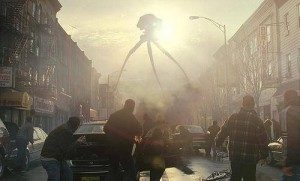
What To Do When Aliens Attack, Redux

I think it prudent to make a few distinctions before we get to the nitty-gritty of the story here, namely, contact with alien life need not be thought of as intrinsically disastrous, though I suspect more than a few will disagree.  We can and should hold out hope that such contact will come with a proverbial olive branch in the clutches of a white dove.  As mentioned in my recent piece titled ‘On the Form and Value of Extraterrestrials, Part II’, I noted that there seem, logically, to be three main reasons for such contact, 1) colonization, 2) the search for resources, and 3) exploration.  Now I agree with those decriers who would suggest that my view of the situation is strongly anthropocentric, but since it is by nature of my humanity that my view of the question is necessarily anthropocentric, I have no choice but to carry on in spite of that fact.

I went on, in the previous piece, to elaborate on the value of each type of visitation, stating that colonization must, by necessity, be malevolent in nature, meaning that our existence would lie in the way of successful alien colonization, and as such we would be exterminated, much like the way we treat cockroaches in our kitchens.  This, of course, would be disastrous to say the least.

If the impetus for contact with alien races is due to the search forresources, we might be spared the proverbial bug bomb, though interference in the search for and collection of such resources might change the game and give such visitors cause to eliminate us prior to or in conjunction with their efforts.  Though for all we know, we could be the resource they are seeking, in which case, such collection would necessarily be hostile (though not necessarily because of the visitors intention, but more-so due to our reaction to the prospect).

If such visitors came with exploration as their motive, we should see no reason why such contact would be anything but benign and peaceful, for what use would there be in interacting with a species violently if your purpose is to learn.

As we’ve seen from popular media in recent years, the prospect of violent alien contact is one to be feared, for if they posses the technical capability to reach us, then their technological advantage will be that much more advanced than our own, putting us at an obvious and crippling disadvantage.  If we would hope to resist such action, it would be military opposition alone that might turn the tides, though our collective military would likely be out gunned and out manned.  For the average individual, battle should be the least of your concern; survival should be paramount at this point.

And here we come to it: 5 Steps to Surviving Violent Alien Contact.

  • Preparedness: as most of us know, emergency preparedness is one of those things that we all think is a good idea, but we rarely get around to doing anything about it.  Evacuation plans, emergency supplies, back up power etc.  These are all the things we should be thinking about ahead of time.  It is likely that violent alien contact on a mass scale will appear to be natural disaster to the majority of the population, at least for a brief time. And like any natural disaster, there are items you will need while local authorities attempt to deal with either evacuations or entrenchment.  It is recommended that everyone have an emergency preparedness kit in their home and/or vehicle, and that it is tested and restocked at least annually.
  • Evacuation and Escape; larger cities would probably be first strike targets, followed by suburban areas and then rural townships, and all three would need to react to the threat in different ways. Providing you have power and it is safe to remain in your home, do so, and turn on your TV.  Instructions from the government for evacuation procedures will likely be broadcast via emergency systems.  If power is out and no instructions are available, remain in your home/office as long as it is safe to do so.  Your instinct will likely be to get to, or gather your loved ones in a safe place, but do so only if it does not pose a threat to yourself.  Always remember that your survival is of paramount importance.  Due to the sheer number of people involved in an urban retreat from alien threat, mass evacuations would inevitably clog highway systems and public transit (providing EM pulse weaponry wasn’t used in a first strike, wherein vehicles would be useless).  Being familiar with all routes of egress from your area is vital, but be prepared to walk.  Travel light, carrying only what you need (such as your emergency preparedness kit).  If ground fighting or aerial attacks are occurring, take shelter underground (basements, subway tunnels etc) until it is save to move on.  In this event I reiterate my comments from the first piece I wrote on this topic, avoid the crowd.  Stay in small groups and don’t follow large columns of people on main routes.  Though in order for this to work, you must be intimately familiar with your general area; otherwise you could end up lost and heading in the wrong direction.
  • Duck and Cover; I hate to say it, but when faced with an aggressive or violent invasion from aliens, aliens with greater technology than our own, your best bet is to duck and cover, to hide and stay hidden.  This is no time to be a hero; it’s time to look out for number one.  There are people who are trained to handle combat, they carry big guns and they answer to the government.  Let them do the fighting on your behalf and get yourself out of harms way.  Though you should know the difference between cover and concealment.  Being hidden doesn’t necessarily mean being safe.  When bullets are flying there are few things that will stop them, trees, building walls, fences etc, bullets will go right through them, just like they would through warm butter.  If you were to find yourself amid live combat between armed forces and an alien threat, you need to be worried about friendly fire, just as much as enemy fire, and essentially, my advice is to get low, stay low and move toward the good guys, when you get to them…keep going.
  • Be Careful Who You Trust; unfortunately, the worst times can bring out the worst in people.  Widespread devastation eliminates the ability of government forces, be they the army or even local police forces, to act and function normally, to keep control over those criminal elements that would use such circumstances to their benefit.  Robbery, theft, rape and murder would go undetected and un-pursued in such conditions, and so you must be weary of the people with which you find yourself.
  • Put the Damn Camera Down and Protect Yourself; How many times have we seen a shaky video from the epicentre of a natural disaster, probably hundreds of times, if not thousands.  These images give us insight into the events and show the rest of the world the suffering that goes on at the front lines of foreign places.  But this, an alien attack, is no spectator sport. As much as one may hope to get a lucky shot of ET waving his alien hand at you through the window of his flying saucer, what’s more likely to happen is that the camera man puts himself and the people around him at greater risk by seeking contact with the enemy forces.  Forget about going down in history as the photographer who got ET’s snap shot, and get yourself to safer ground.

Would we stand a chance against a technologically advanced alien invasion?  In my view, probably not.  I think it would be safe to say that we’d all be on our own from the start of the show.  Governments would scramble to protect leaders and dignitaries, but the common folk, the people who make up the populous at large would be left to fend for themselves.  We’ve already seen as much in recent natural disasters, so I’m sorry to say it, but we’ve got no one watching our backs.  If devastation occurred on a global scale, anarchy and chaos would reign indefinitely and the human population would be thinned to near extinction.  Only those able to withstand the change from our current way of life, to that of pre-industrial revolution will survive.  It would be an Armageddon, though I suspect there would be less fire and brimstone than traditions suggest.

Nazca Peru, Drawing Lines in the Sand

A barren desert, frigid temperatures, and stinging winds are just a few features of the environment to be found in parts of Peru.  This relatively small country seated on the pacific coast of South America is divided into five provinces, the largest of which is Nazca, which is home to one of the great wonders of the world – the Nazca Lines.

The Nazca Lines are an ancient mystery linked to religious undertones and maybe even ancient aliens. Though standing on the ground at the plateau on which these intricate shapes lay, one can only scarcely see what all the fuss is about.  It is from the air that the real sights can be seen.

Made by overturning the red rocks and pebbles and exposing the white sand below, the Nazca Lines were constructed somewhere between 400 and 650 AD by the ancient Nazca peoples.  These geoglyphs, which number in the hundreds, depict many animals from in and around Peru, such as monkeys and birds and even human figures.  Others are simple geometric shapes and lines.

Experts can hardly agree on the purpose of the glyphs, let alone how the were made.  Some of the more obscure theories suggest that the Nazca people had mastered low altitude flight and that they used the lines as landing strip guidelines, while others suggest that the Nazca had other worldly help, but not all are convinced.  The prevailing theory proposes that the geoglyphs were constructed as a part of religious rituals, paying homage to the gods whom the Nazsca believed were responsible for water and rain.

Joe Nickell of the University of Kentucky replicated a geoglyph of his own, demonstrating that lines could have been constructed without flight or aerial assistance.  Using only simple ground based surveying techniques Nickell’s geoglyph was surprisingly consistent with the original Nazca Lines.

The Nazca Lines cover an area of nearly 500 square kilometres, with some of the geoglyphs measuring up to 270 meters across.  It is the dry and windless environment of the Nazca desert that keeps the lines preserved.  The Nazca desert is perhaps the driest location on earth, and this has helped to keep the geoglyphs undisturbed for nearly 1500 years.

In 1985, the archaeologist Johan Reinhard published archaeological, ethnographic, and historical data demonstrating that worship of mountains and other water sources predominated in Nazca religion and economy from ancient to recent times. He theorized that the lines and figures were part of religious practices involving the worship of deities associated with the availability of water, which directly related to the success and productivity of crops. He interpreted the lines as sacred paths leading to places where these deities could be worshiped. The figures were symbols representing animals and objects meant to invoke the gods’ aid in supplying water. But, the precise meanings of many of the individual geoglyphs remain unsolved as of 2011.

As mentioned above, others still believe the Nazca Lines are a part of a greater landscape of mystery. One Eric von Däniken believes that the lines could not have been constructed by the people of Peru, and maintains that the lines are runways for extraterrestrial craft.  Others yet believe that the lines demonstrate an astronomical knowledge that should not have been present during the period of the lines construction.

In any event, the area has been declared a UNESCO World Heritage Site, with the hope of preservation into the foreseeable future, though pollution and deforestation threaten to change the environment, to the detriment of conservation.  The lines themselves are delicate, most averaging only 10-30cm deep, which means that a single heavy rainfall could wipe the geoglyphs off the face of the Earth altogether.

Evil, A Primer – A History of a Bad Idea

Evil, A Primer, is exactly what it is held to be, a neat little book that discusses Evil in all its forms. It is definitely an introduction only. though as the title says, it is just a primer.

William Hart treated this subject with the style of a poet and the mind of a scientist and the result is a highly readable introduction to one of humanities deepest philosophical debates.

“[Mankind] is fueled by a kind of existential rage that itself explodes forth from the cold knowledge that, though we humans have been bred to play among he planets and gaze upon eternity, we still are fated to die like any insect.”

So succinct a commentary of the human condition has scarcely been seen before. For my part I offer a 4 out of 5 rating and would recommend this book for anyone who wishes to delve into the philosophies of humanity

A Short History of Nearly Everything – Reviewed

An immense and somewhat overstated book. A Short History of Nearly Everything is heralded as imminently readable and I beg to differ. This is not a book for those less well versed in the natural sciences. Nevertheless, I did enjoy it, and I tell you now, the title is not inaccurate. This is, quite literally, a history of nearly everything, from physics, cosmology, meteorology, geology, biology, and everything in between. I come away feeling a slight bit smarter for the experience, though I wonder if such a book would be better written in multiple volumes.

Bill Bryson, the eminent travel writer has impressed with his comprehensive research and universal approach. Bryson is, if not slightly misanthropic, a gifted author, and I recommend this book to anyone who wishes an in-depth review of the humanities, though the layman might find it to be more a sleep-aid than a learning experience.  Bravo Mr. Bryson.

Bimini Road, A New Look At An Old World

Discovered in 1968 by deep-sea explorer -J. Manson Valentine, Bimini Road’s is an oddly compelling story.  Not really a road by any means, Bimini is actually an island in the Bahamas’ archipelago.  Just off the north end of the island is what some believe is ancient evidence of the famed lost city of Atlantis.

Approximately 3500 years old, the underwater structure consists of hundreds of rectangular slabs of limestone, laid in a line running northeast-southwest, and forming what resembles a road or a wall.  Recent dive expeditions have yielded interesting results, bringing large odd shaped stones to the surface.  Some adventurers have found what they believe are ancient nautical anchors, some dating as far back as 3000 years, which makes them an enigma in-and-of-themselves.  If they truly are nautical anchors, then they are evidence of a nautical culture some 2000 years before the first record of such activity.

What makes Bimini doubly interesting is the reason why some think this site is related to Atlantis.  None other than the Sleeping Prophet, Mr. Edgar Cayce, predicted that Atlantis would again rise from this location in 1969.  This prediction is eerily prescient as word of Valentines discovery came in the early part of that very year.

Located just more than 84 kilometres off the coast of Miami, Bimini rests just inside the north-western border of the Bermuda Triangle, though mainstream geologists contend that the structure of Bimini is entirely natural.  It is claimed that the Bimini Road stones are beach rock that has been shaped by the tides and left strewn along the seabed.  Though not everyone believes the mainstream conclusion; as you read this, there are several competing explorers trying to raise funds for future expeditions at Bimini, all in an attempt to answer the puzzle that is Bimini Road.

A Mermaid’s Song

A Bronze Statue of a Mermaid at Copenhagen

Flaxen hair and fair skin, she sings a melody that enchants the soul, listen too closely and she’ll ensnare your mind, dragging you to the depths of the ocean.

She is a mermaid and her legend runs back well beyond written history.   The legend of the mermaid is always thought of with the most beautiful women imaginable, the kind of beauty that comes from taking krill oil everyday or the kind of beauty that only cosmetic surgery can make.

The first known account of a mermaid comes out of Assyria (an ancient kingdom centered on the Upper Tigris River in northern Mesopotamia) circa 1000BC.  The goddess Atargatis, mother of Assyrian queen Semiramis, loved a mortal shepherd and unintentionally killed him. Ashamed, she jumped into a lake to take the form of a fish, but the waters would not conceal her divine beauty. Thereafter, she took the form of a mermaid—human above the waist, fish below.

But the Assyrians do not hold a franchise over the mermaid.  Mermaids may be the most common cross-cultural legend around, with stories of their treacherous song and awesome beauty found in the traditions of old world places all around the globe – from Britain and Scotland, to Russia, Africa, Japan and China, and even both the east and west coasts of Canada and the US.

Of course, the most familiar depiction of a mermaid is through Hans Christian Anderson’s unforgettable fairytale The Little Mermaid, as has been made popular by Disney in their 1989 interpretation.  Probably largely due to that mainstream familiarity with cartoon characters and sing-a-long lyrics, the mermaid has moved out of favour in cryptozoology circles, taking a back seat to more believable candidates, though there are still a few believers out there.

Scientifically there’s nothing to talk about, most, if not all so-called mermaid encounters are written off as a case of mistaken identity, laying the blame squarely at the feet, or flippers as the case may be, of salt water dugongs and manatees.  These lumbering giants are known to be misleadingly comely at a distance, though up close they’re definitely nothing to write home about.  Even so, the prevailing story in maritime tradition is that mermaids are real creatures who use their song to lure men into the depths of the sea, whether by coaxing deck hands overboard or by making captains run aground.

Of course, anyone who’s ever trolled through YouTube annals for weird and wonderful videos has surely come across an odd picture or two, depicting what appears to be either the worlds ugliest fish (which is saying something) or a genuine merman (the male version of a mermaid).  Though as I’ve warned in the past, be careful what you believe, as your eyes have been fooled.  Dating back at least as early as the Renaissance, people have been hoaxing mermaid remains and skeletons and passing them off as the real thing.  In the late 19thcentury P.T. Barnam had on display a half-human half-fish monstrosity in his museum called The Fiji Mermaid.  Unfortunately for those he conned, this mermaid was just a clever trick of creative taxidermy, and such are the modern hoaxes as well.

Any way you slice it, the mermaid legend has its charm, and despite the glaring lack of evidence for its existence, there are many fishermen the world over who believe without a doubt, that the sirens are singing their song to them.